
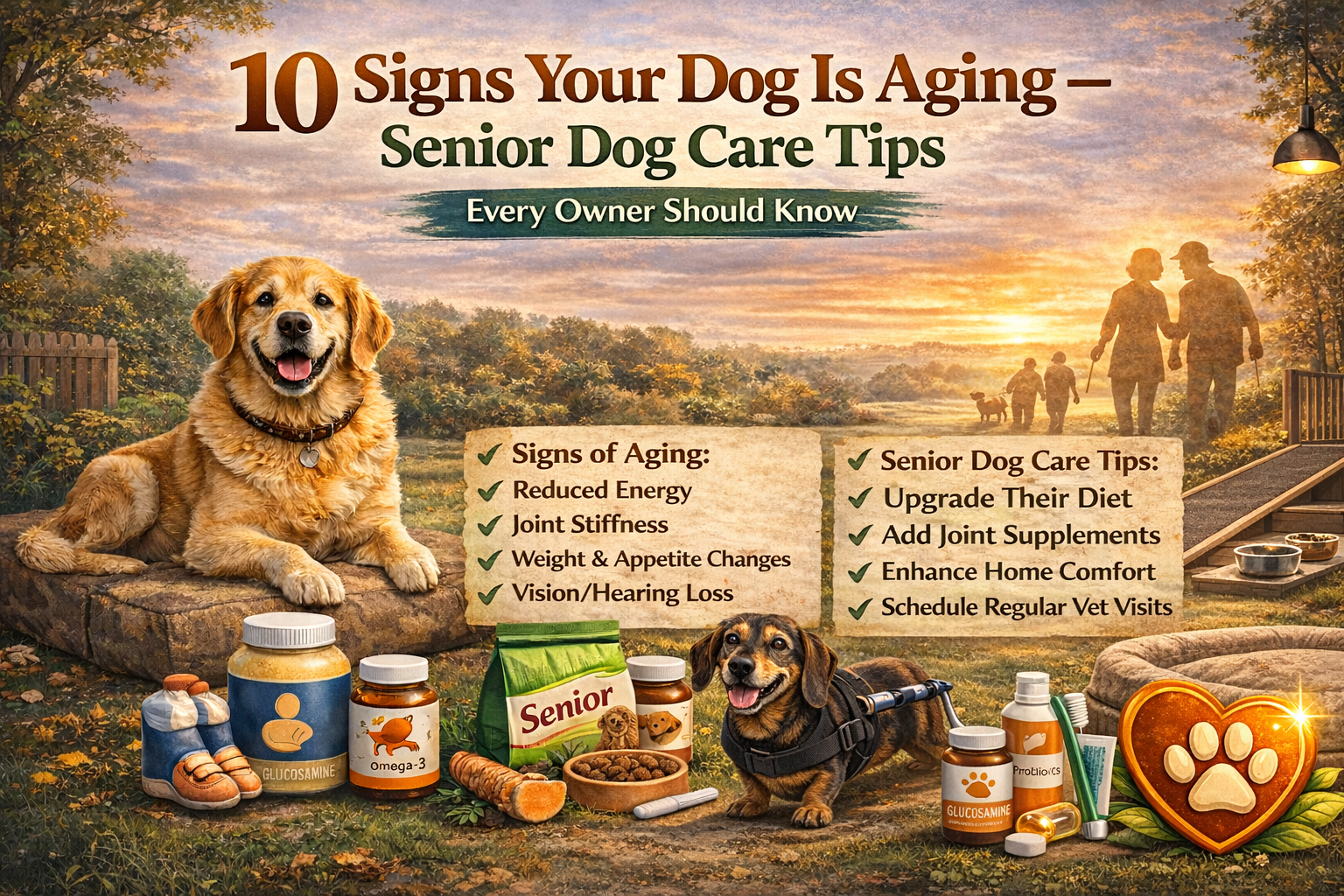
Dogs may not show gray hair as clearly as humans, but aging brings many subtle changes that every pet parent should recognize. Understanding the early signs of aging can help you provide better care, improve your dog’s quality of life, and prevent serious health issues before they worsen.
In this guide, we’ll explore 10 clear signs your dog is aging and share practical senior dog care tips every owner should know to keep their furry companion healthy, comfortable, and happy during their golden years.
When Is a Dog Considered a Senior?
Dogs age at different rates depending on breed and size:
- Small breeds: 8–10 years
- Medium breeds: 7–9 years
- Large breeds: 6–8 years
- Giant breeds: 5–7 years
Once your dog enters this stage, proactive senior care becomes essential.
1. Reduced Energy and Activity Levels
One of the earliest signs of aging is a noticeable drop in energy.
What You May Notice:
- Less enthusiasm for walks or playtime
- Longer naps during the day
- Slower movement
Senior Dog Care Tip:
Don’t force activity, but maintain gentle daily exercise. Short walks and light play help preserve muscle strength and joint flexibility.
2. Joint Stiffness and Mobility Issues
Aging dogs commonly develop joint problems such as arthritis.
Signs to Watch For:
- Difficulty standing up or lying down
- Limping or stiffness, especially in the morning
- Trouble climbing stairs or jumping
Senior Dog Care Tip:
- Add joint supplements (glucosamine, chondroitin, omega-3s)
- Use orthopedic dog beds
- Install ramps instead of stairs
3. Weight Gain or Weight Loss
Changes in metabolism can cause sudden weight changes in senior dogs.
Possible Causes:
- Reduced activity
- Muscle loss
- Underlying health issues
Senior Dog Care Tip:
Switch to senior dog food with controlled calories and high-quality protein. Monitor weight monthly and consult your vet if changes are sudden.
4. Changes in Appetite or Digestion
Older dogs may eat less—or become pickier.
Common Signs:
- Loss of interest in food
- Digestive upset
- Constipation or diarrhea
Senior Dog Care Tip:
- Feed smaller, more frequent meals
- Choose easily digestible foods
- Add probiotics if recommended by your vet
5. Dental Problems and Bad Breath
Dental health declines significantly with age.
Warning Signs:
- Bad breath
- Difficulty chewing
- Drooling or bleeding gums
Senior Dog Care Tip:
- Brush teeth regularly
- Use dental chews
- Schedule professional cleanings
Dental disease can lead to heart, kidney, and liver problems if ignored.
6. Vision and Hearing Loss
Senior dogs often experience sensory decline.
Vision Loss Signs:
- Bumping into furniture
- Hesitation in low light
Hearing Loss Signs:
- Not responding to commands
- Sleeping through loud noises
Senior Dog Care Tip:
- Keep furniture placement consistent
- Use verbal and hand signals
- Avoid startling your dog
7. Increased Anxiety or Behavioral Changes
Cognitive decline is common in aging dogs.
Behavioral Changes:
- Confusion or disorientation
- Increased anxiety
- Nighttime restlessness
Senior Dog Care Tip:
- Maintain a consistent routine
- Provide mental stimulation
- Consider calming supplements
8. Changes in Sleep Patterns
Senior dogs often sleep more—but not always better.
What Happens:
- More daytime sleep
- Restlessness at night
Senior Dog Care Tip:
- Ensure comfortable sleeping areas
- Increase daytime activity slightly
- Stick to regular feeding and walking schedules
9. Loss of Muscle Tone
Muscle loss (sarcopenia) is a natural aging process.
Signs:
- Thinner legs
- Reduced strength
- Less stability
Senior Dog Care Tip:
- Gentle strength exercises
- High-quality protein diet
- Maintain consistent movement
10. Increased Health Issues and Vet Visits
Senior dogs are more prone to chronic conditions such as:
- Arthritis
- Heart disease
- Kidney issues
- Diabetes
Senior Dog Care Tip:
Schedule biannual vet checkups. Early detection saves money—and lives.
Essential Senior Dog Care Tips Every Owner Should Follow
1. Upgrade Your Home Environment
- Non-slip flooring
- Orthopedic beds
- Easy-access food and water bowls
2. Adjust Nutrition
- Senior-specific formulas
- Joint-support ingredients
- Adequate hydration
3. Prioritize Preventive Care
- Regular blood tests
- Dental exams
- Parasite prevention
4. Support Mental Health
- Puzzle toys
- Gentle interaction
- Familiar routines
How to Improve Quality of Life for Senior Dogs
- Keep them warm
- Offer frequent affection
- Avoid stressful changes
- Celebrate their slower pace
Aging doesn’t mean decline—it means adapting care with love and awareness.
Frequently Asked Questions (FAQ)
How long do senior dogs live?
With proper care, many dogs live 2–5 happy years beyond senior age.
Can senior dogs still learn?
Yes! Training keeps their minds sharp.
Should I change my dog’s diet?
Yes, senior dogs benefit from age-appropriate nutrition.
Final Thoughts: Aging Is Not the End—It’s a New Chapter
Recognizing the signs of aging early allows you to provide better comfort, health support, and love. With proper nutrition, supplements, mobility aids, and regular vet care, senior dogs can live joyful, pain-free lives well into their golden years.
Your dog has given you years of loyalty—now it’s time to give them the care they deserve.